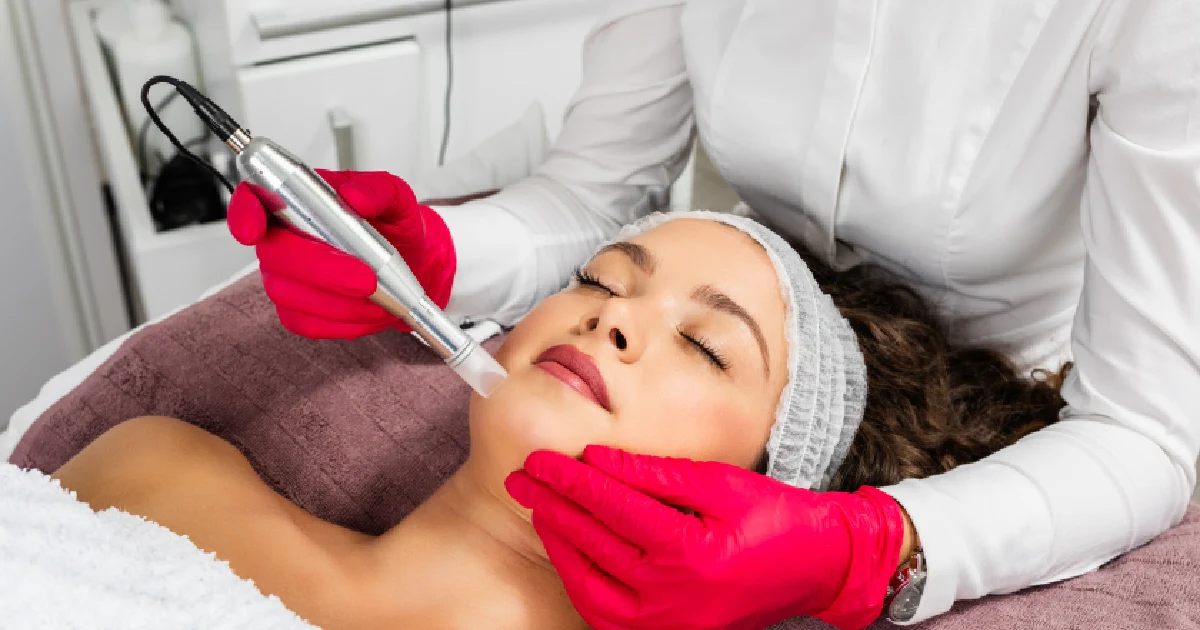
To appreciate microneedling, it helps to understand what happens beneath the surface.
Controlled micro-injury and wound-healing response: microneedling uses ultra-fine needles, typically between 0.5 and 2.5 mm in length, to create precise channels in the outer layer of the skin and into the upper dermis. These micro-injuries are just enough to activate the skin's wound-healing cascade. In the inflammation phase, blood flow increases to the treated area, delivering oxygen and immune cells. In the proliferation phase, fibroblasts, the cells that produce collagen and elastin, are activated. In the remodeling phase, new collagen is added and the skin can look firmer and smoother.
Activation of fibroblasts and growth factors: the micro-injuries stimulate the release of growth factors, including platelet-derived growth factor (PDGF), transforming growth factor-beta (TGF-beta), and vascular endothelial growth factor (VEGF). These compounds play a role in generating new cells, repairing blood vessels, and supporting collagen synthesis. Fibroblasts act as the skin's collagen factories, and microneedling helps activate their function.
Neo-collagenesis and neo-angiogenesis: neo-collagenesis refers to the production of new collagen, while neo-angiogenesis is the formation of new blood vessels. Both can support healthy, glowing skin, contributing to improved texture, elasticity, and tone.